Twentieth Sunday in Ordinary Time – Year A

Love and faith give us the strength never to give up. In today’s Gospel, the Canaanite woman teaches us this through her deep love for her daughter and her unwavering faith in Jesus. Despite every obstacle, she continued to plead with Him. Jesus finally said to her: “Woman, you have great faith!” May we too persevere in prayer, especially when God seems silent. Faith is not a magic wand; it is trusting Jesus even when we cannot see the answer. When faith and love go hand in hand, we learn to persevere and place everything confidently in God’s hands.

L-Imħabba u l-fidi jagħtuna qawwa biex ma naqtgħux qalbna. Fil-Vanġelu tal-lum, il-mara Kananeja tgħallimna dan b’mod qawwi. Minkejja l-ostakli, l-umiljazzjoni u s-skiet li ltaqgħet magħhom, hija baqgħet titlob lil Ġesù b’fidi u mħabba għal bintha. Fl-aħħar, Ġesù qalilha: “Mara, il-fidi tiegħek hija kbira!” Jalla aħna wkoll, fit-tiġrib u fit-talb tagħna, ma naqtgħux qalbna. Il-fidi mhix bakketta maġika, imma fiduċja sħiħa f’Ġesù, anke meta forsi ma jkollniex dak li nixtiequ eżatt. Meta l-imħabba u l-fidi jimxu flimkien, nitgħallmu nipperseveraw u nħallu kollox f’idejn il-Mulej.

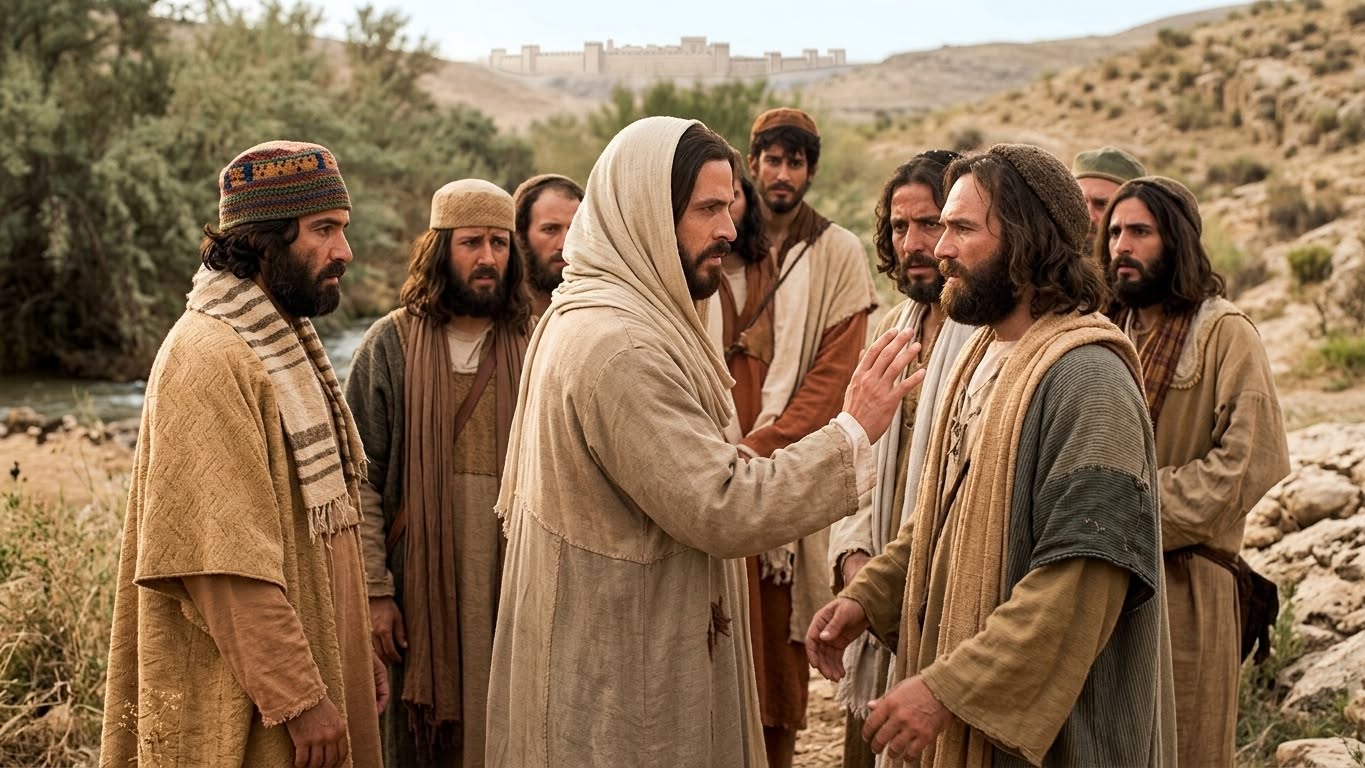
Holy Gospel of Jesus Christ according to Saint Matthew 15,21-28.
At that time Jesus withdrew to the region of Tyre and Sidon.
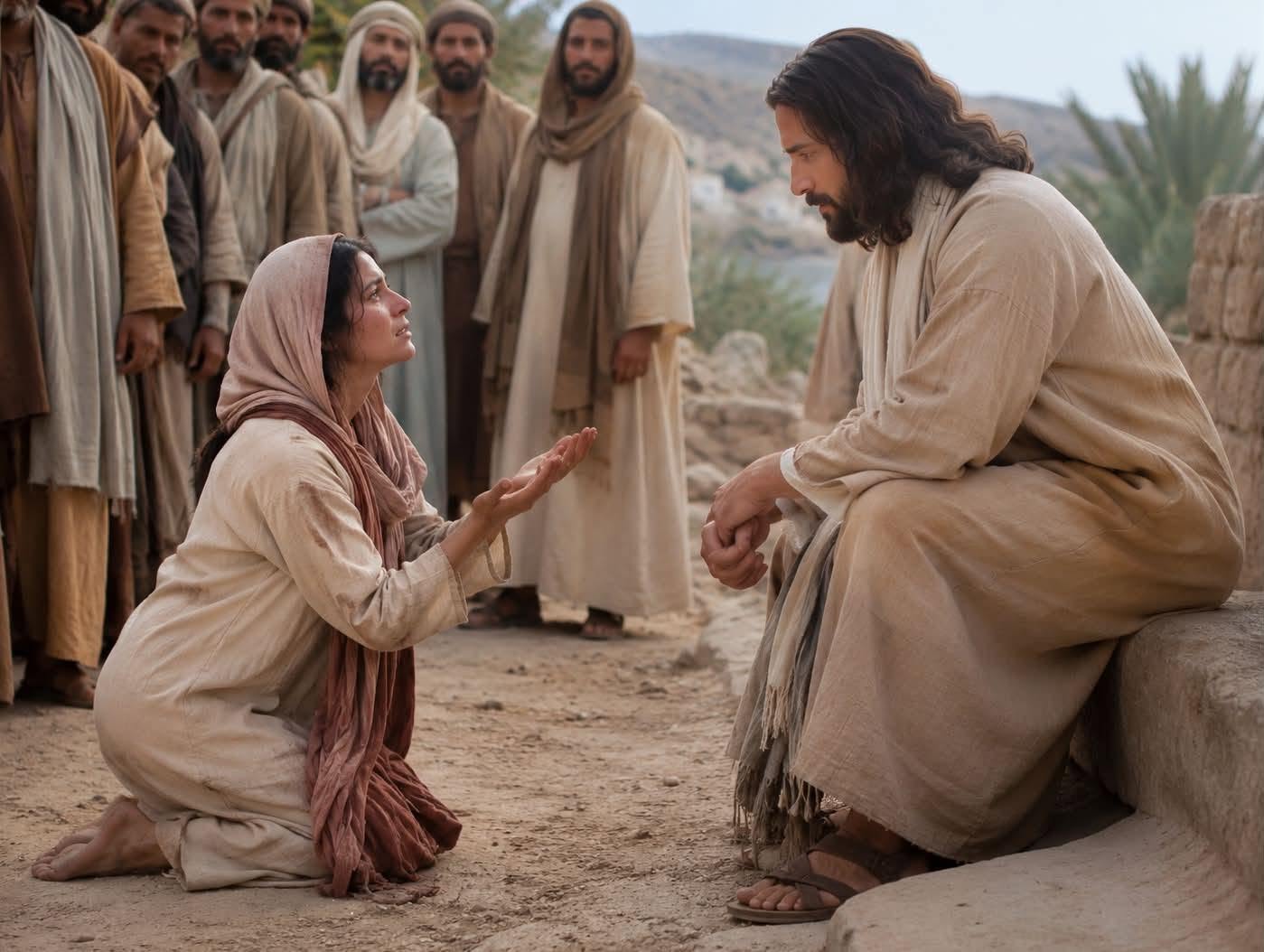
And behold, a Canaanite woman of that district came and called out, "Have pity on me, Lord, Son of David! My daughter is tormented by a demon."
But he did not say a word in answer to her. His disciples came and asked him, "Send her away, for she keeps calling out after us."
He said in reply, "I was sent only to the lost sheep of the house of Israel."
But the woman came and did him homage, saying, "Lord, help me."
He said in reply, "It is not right to take the food of the children and throw it to the dogs."
She said, "Please, Lord, for even the dogs eat the scraps that fall from the table of their masters."
Then Jesus said to her in reply, "O woman, great is your faith! Let it be done for you as you wish." And her daughter was healed from that hour.

Nineteenth Sunday in Ordinary Time, Year A

In today’s Gospel, Peter begins to sink when he takes his eyes off Jesus and looks instead at the storm around him.

How often do we do the same? When difficulties, fears and temptations surround us, we can become so focused on our problems that we forget who is with us.

Jesus does not promise that the storms will never come; he promises to remain with us through them. The Eucharist gives us a constant place to fix our gaze on Christ, truly present among us. When we kneel before the Blessed Sacrament or receive Holy Communion, we renew our trust in him. Let us keep our eyes fixed on Jesus, especially when the waters become rough.

After he had fed the people, Jesus made the disciples get into a boat and precede him to the other side, while he dismissed the crowds.
After doing so, he went up on the mountain by himself to pray. When it was evening he was there alone. Meanwhile the boat, already a few miles offshore, was being tossed about by the waves, for the wind was against it.
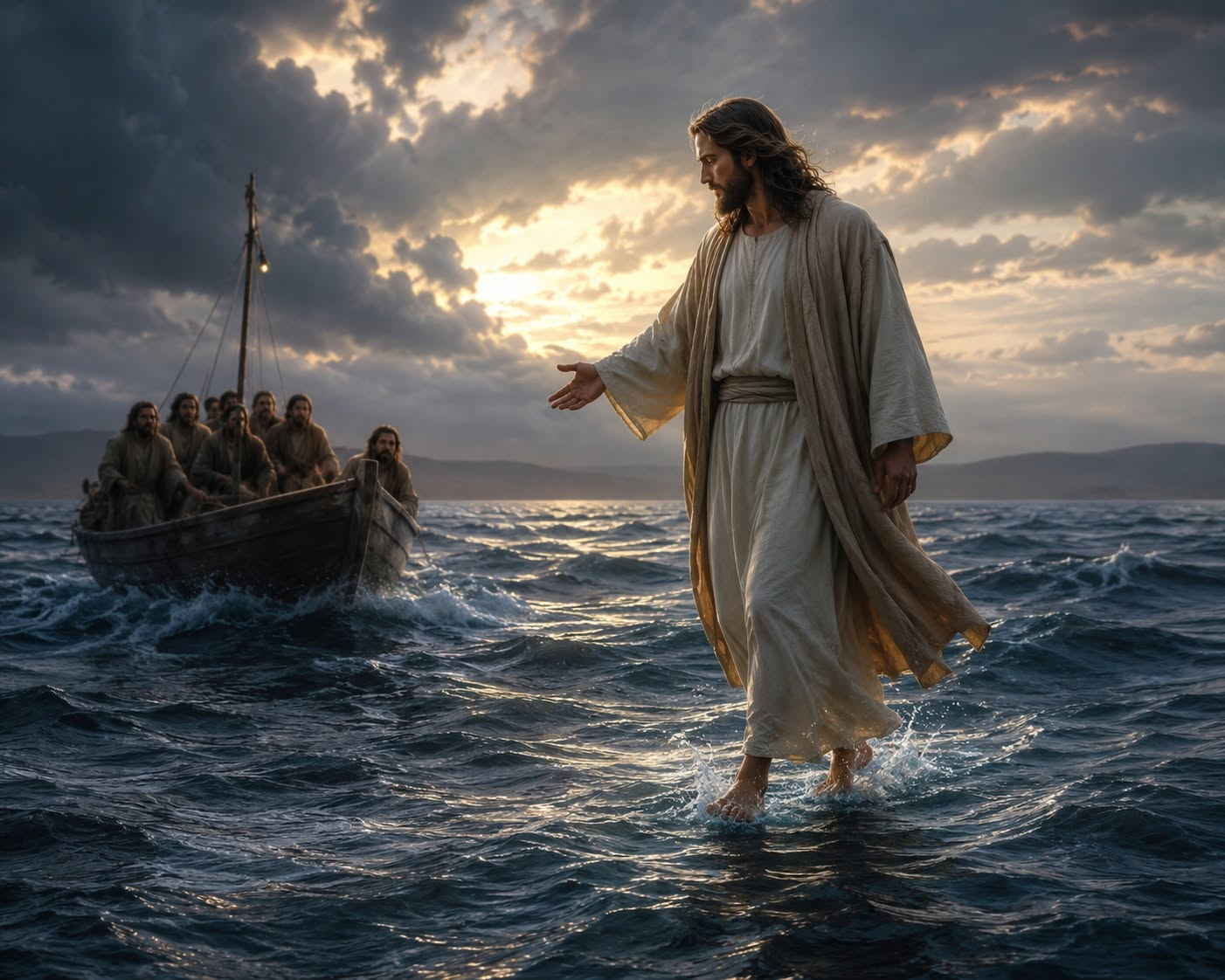
During the fourth watch of the night, he came toward them walking on the sea. When the disciples saw him walking on the sea they were terrified. “It is a ghost,” they said, and they cried out in fear.
At once Jesus spoke to them, “Take courage, it is I; do not be afraid.”
Peter said to him in reply, “Lord, if it is you, command me to come to you on the water.”
He said, “Come.”
Peter got out of the boat and began to walk on the water toward Jesus. But when he saw how strong the wind was he became frightened; and, beginning to sink, he cried out, “Lord, save me!”
Immediately Jesus stretched out his hand and caught Peter, and said to him, “O you of little faith, why did you doubt?”
After they got into the boat, the wind died down. Those who were in the boat did him homage, saying, “Truly, you are the Son of God.”
The Gospel of the Lord.
Praise to you, Lord Jesus Christ.

The Eighteenth Sunday in Ordinary Time – Year A

In today’s Gospel, Jesus shows us his compassion and love in the midst of human suffering. The death of John the Baptist brings him sorrow, yet when the crowds seek him, he sets aside his own pain and welcomes them with compassion. His joy is found completely in loving, serving and caring for others. Jesus gives himself without limits, offering healing, truth and nourishment. His love is unconditional; our weaknesses do not distance him, but draw him closer. Like the hungry crowd, we are invited to receive the spiritual food he freely gives and allow him to strengthen us.

Sadness and suffering are part of our human journey, yet as believers we find our strength in Christ. He enters our pain, remains at our side, and gives us the grace to persevere with hope and trust. Furthermore, no joy this world can offer compares to the joy of knowing and following him, for his presence gives lasting peace even when life is difficult.

A reading from the holy Gospel according to Matthew.
When Jesus received the news of John the Baptist’s death he withdrew by boat to a lonely place where they could be by themselves. But the people heard of this and, leaving the towns, went after him on foot. So as he stepped ashore he saw a large crowd; and he took pity on them and healed their sick.
When evening came, the disciples went to him and said, “This is a lonely place, and the time has slipped by; so send the people away, and they can go to the villages to buy themselves some food.”
Jesus replied, “There is no need for them to go: give them something to eat yourselves.”
But they answered, “All we have with us is five loaves and two fish.”
“Bring them here to me,” he said.
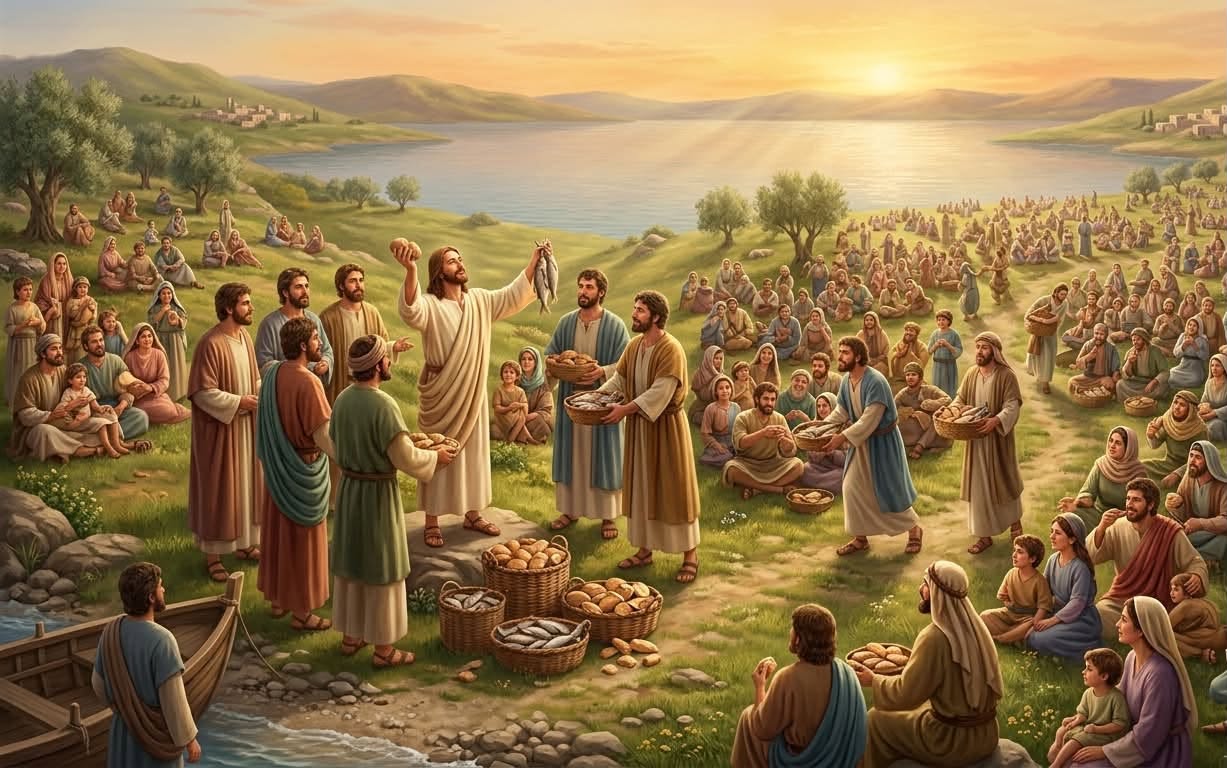
He gave orders that the people were to sit down on the grass; then he took the five loaves and the two fish, raised his eyes to heaven and said the blessing. And breaking the loaves handed them to his disciples who gave them to the crowds.
They all ate as much as they wanted, and they collected the scraps remaining; twelve baskets full.
Those who ate numbered about five thousand men, to say nothing of women and children.
The Gospel of the Lord.
Praise to you, Lord Jesus Christ.

Seventeenth Sunday in Ordinary time – Year A

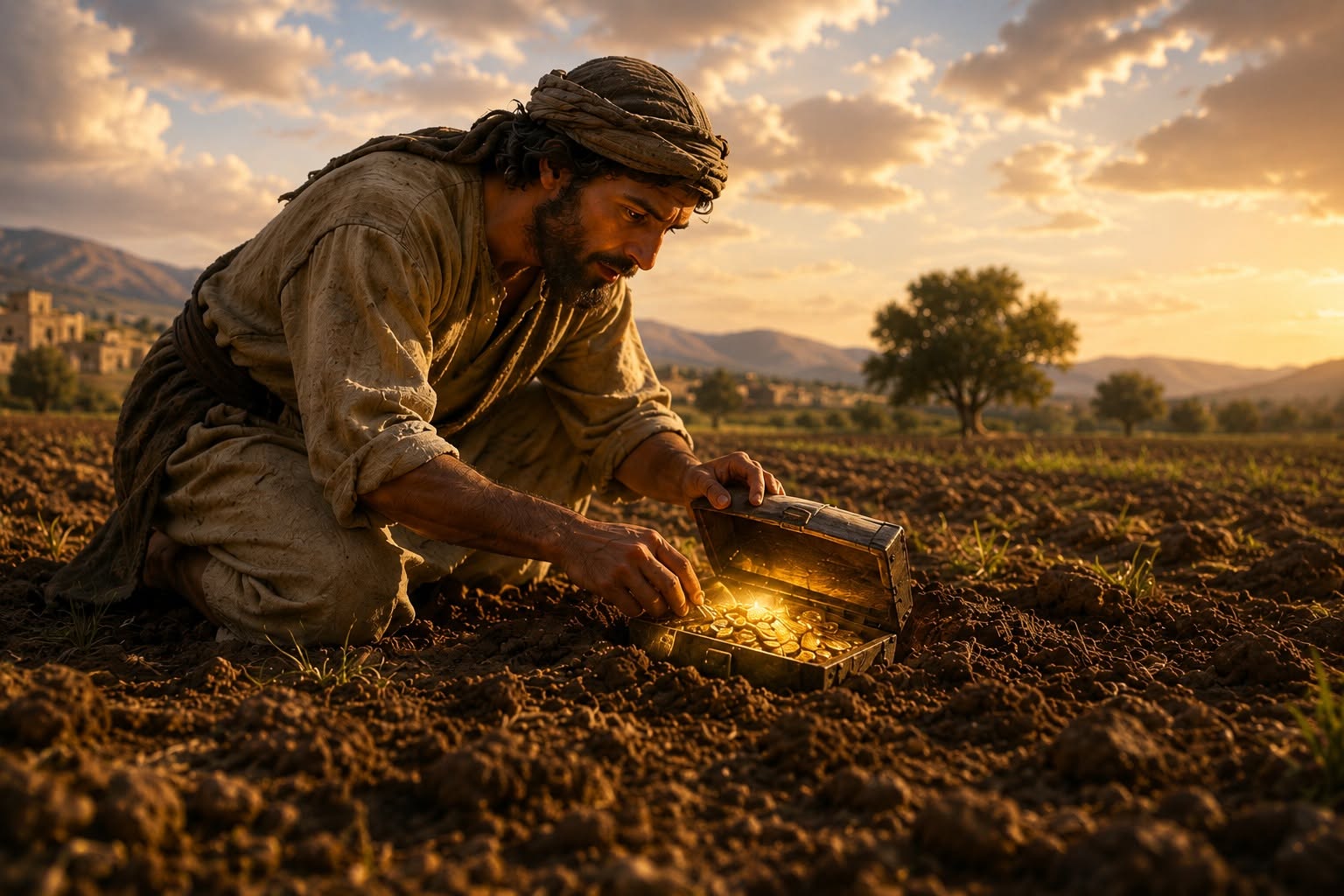
In today’s Gospel, Jesus compares the Kingdom of God to a hidden treasure and a pearl of great value. Both the farmer and the merchant willingly surrender everything because they recognise what is truly priceless. Likewise, following Christ transforms our lives, giving them lasting purpose, joy and hope. We discover this treasure through God’s quiet work in our daily lives and through our faithful search for him. May we remain attentive to his grace and persevere in seeking the riches of his Kingdom.

It might be worth highlighting that Jesus is not praising the worker’s apparent secrecy. Like many parables, the details simply set the scene. For example, in other parables Jesus uses dishonest stewards or unjust judges without approving their behaviour. Rather, he uses the story to highlight the incomparable value of God’s Kingdom and the joyful commitment it deserves.

Sixteenth Sunday in Ordinary time – Year A

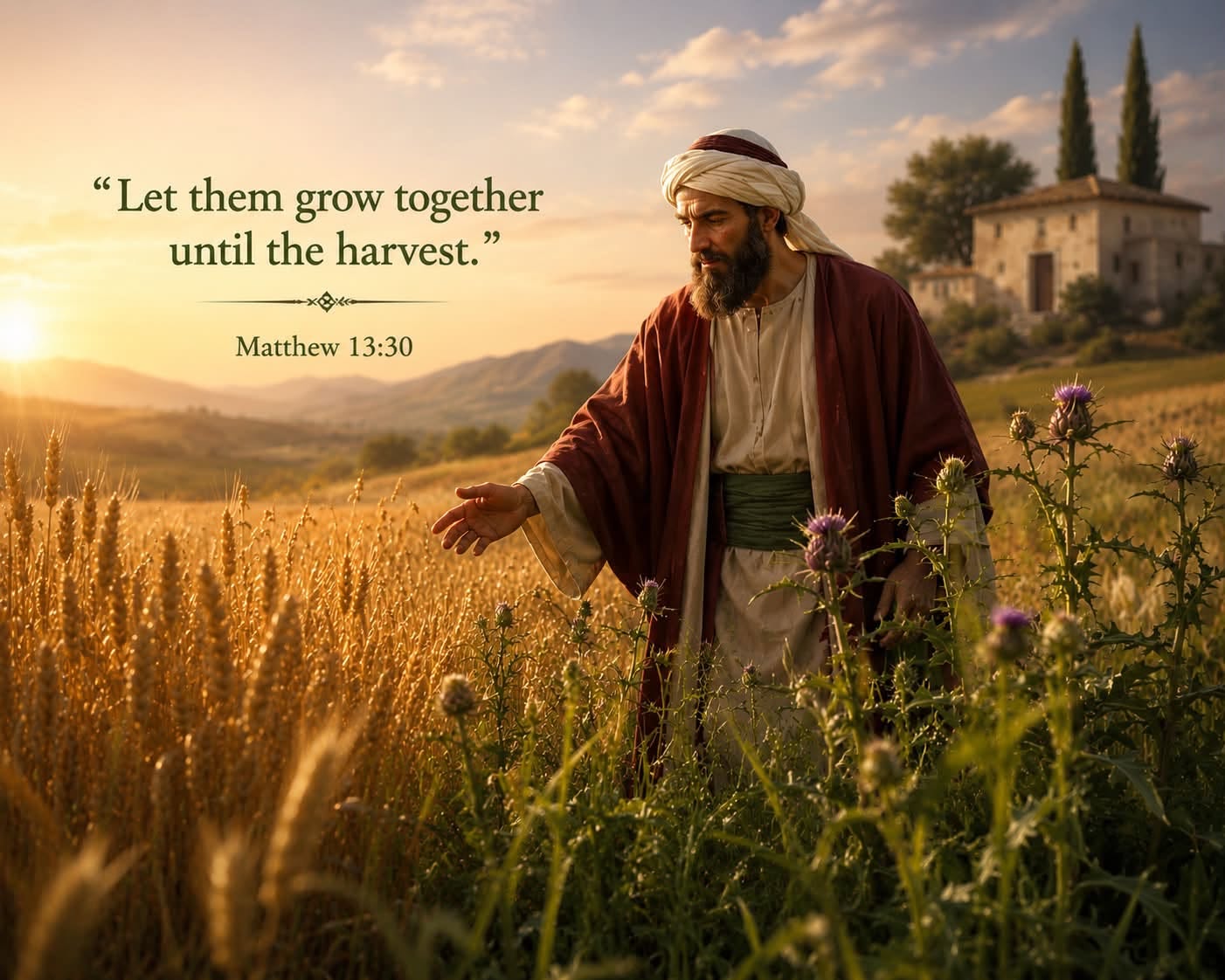
The Parable of the Wheat and the Weeds reminds us not to judge others, but to trust God to judge each person in His perfect time. At the same time, the parables of the mustard seed and the yeast teach us that the Kingdom of God often begins in the smallest and most unnoticed ways, yet grows with extraordinary power. Every act of love, every gesture of kindness, and every witness of faith has the potential to touch hearts and transform lives. We are called to be instruments of hope, peace and mercy, nurturing our faith through prayer, devotion and the example we set for others. Like the mustard seed that grows into a great tree and the yeast that leavens the whole batch of dough, our faithful daily actions, however small they may seem, can inspire renewal within our families, our communities and the wider world.

Fourtheenth Sunday in Ordinary time – Year A

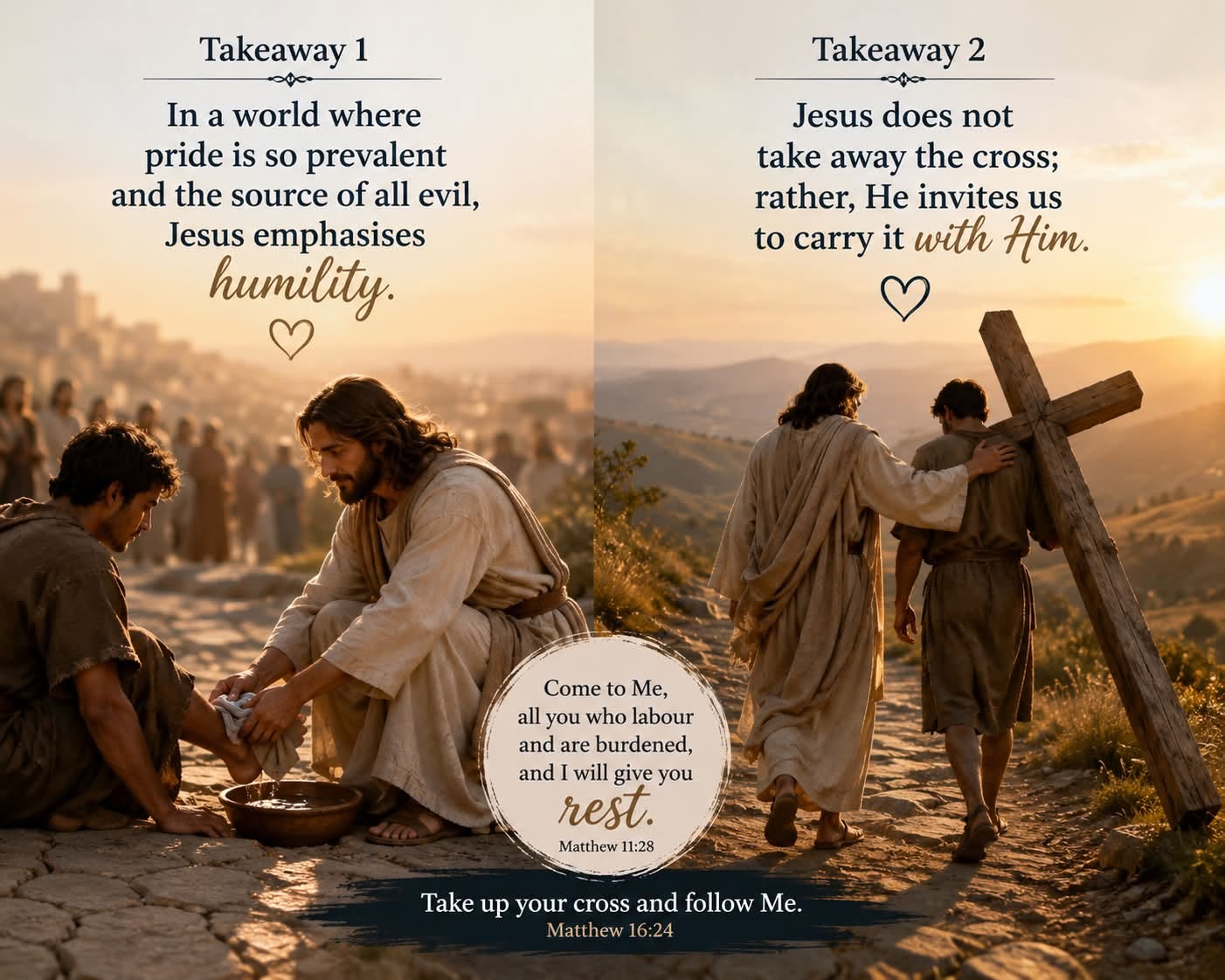
In my reflection on this Sunday’s Gospel, I have two takeaways. Firstly, in a world where pride is so prevalent and lies at the root of every sin, Jesus calls us to embrace humility and gentleness, for these open our hearts to His peace. Secondly, Jesus does not remove our crosses but invites us to carry them with Him, transforming burdens into hope and peace. True rest is found not in avoiding sacrifice, but in walking beside Jesus. May we learn from His humble heart and become instruments of His peace in our daily lives.

Thirteenth Sunday in Ordinary Time – Year A

Today’s Gospel is one of the most demanding in the New Testament. Jesus is not asking us to love our families less, but to love Him first, so that we may truly love our family, neighbours and everyone else with His own selfless love. There are moments when following Him demands sacrifice, courage, or even misunderstanding from those we cherish. My first takeaway is that Christ must always be the source of every other love. Secondly, although it is natural to pray for our crosses to be taken away, we should pray above all for the strength to embrace them with Christ. This also changes how we understand vows and promises. They should never be bargains with God: “If You solve my problem, I will do this.” Rather, they should be acts of trust: “Lord, I will walk in this procession because You will walk with me as I carry my cross.”. Loving Christ above all means trusting Him enough to carry our crosses with Him, while humbly accepting support from God and from those He places along our path.

Twelfth Sunday of Ordinary Time – Year A

Some years ago, I reflected on the concept of immediacy in today’s world. However, we often value most what requires effort and sacrifice to obtain. Likewise, if we truly reflected on Christ’s Passion and the immense price He paid for our salvation, we would take sin far more seriously. Instead of excusing our faults by comparing ourselves with others, we would repent sincerely and strive for holiness through penance. Meditation on Jesus’ suffering helps us appreciate His love and avoid offending God.

Solemnity of Corpus Christi

The Solemnity of Corpus Christi celebrates the Catholic belief that Jesus Christ is truly present in the Eucharist; Body, Blood, Soul and Divinity. The Church teaches that, through the words of consecration at Mass, bread and wine are transformed into Christ’s Body and Blood, a mystery known as transubstantiation. Christ gave us this sacrament so that His presence might remain with humanity throughout history, nourishing us spiritually, strengthening our faith, and guiding us on our journey towards eternal life with God

Pentecost Sunday

(a) At Pentecost, the disciples experienced that where the Holy Spirit is present, there is harmony and unity, while distance from God brings discord. Let us not be misled by the focus on languages. The message is clear: despite different nationalities and languages, they were united in the same mission and purpose.

(b) Jesus had already prepared the disciples for this moment. He told them He would return to the Father, yet promised they would not be left alone. Through the Holy Spirit, God would remain close to them, guiding and strengthening them in their mission and daily lives.

(c) Let us also not be misled by the symbolism of fire. The meaning is clear: the Holy Spirit gives strength and courage. We all need inner strength. Sometimes we turn to God when we are weak. But to go beyond our limits, we cannot be held back by emotional, mental, and physical weakness. Prayer helps us remain close to God and gives us courage to take our faith to a deeper level and proclaim it with faith.

(d) Despite this challenge, the message is reassuring: testimonies of faith can be shown by anyone, and not only by the “chosen” or the “few”. Starting from our ordinary life, relationships, our families, our participation in the Mass and receiving the Sacraments, and also through other visible acts of piety and gestures.