Selected work

Bibliography

The comprehensive bibliography is currently being compiled.

Academic Writings

Seguna, Omar (2020) Pedagogical affordances and challenges of tablets: How can the Charter for 21st century literacies support tablet-mediated teaching and learning? EdD thesis, University of Sheffield.

Seguna, O. (2021). How can the Charter for 21st century literacies support technology-mediated teaching and learning? Malta Journal of Education, 2021, 41-56. Institute for Education. https://mje.ife.edu.mt/index.php/pub/article/view/83

Seguna, O. (2023, April 22). It-Traġitt fil-ħsieb edukattiv: Ħarsa analitika lejn il-kitbiet ta’ Ugo Mifsud Bonnici u Evarist Bartolo. Il-Qawwa tal-Kelma: Ir-Retorika Politika, 64-73. L-Università ta’ Malta.

Seguna, O. (2024). The use of technologies in learning Maltese for the early years. The Educator: A Journal of Education Matters, (9). Malta Union of Teachers.

Others

Seguna, O. (1999). Education and women in ancient Greece : an account of their portrayal by ancient Greek authors and contemporary critics (Bachelor’s dissertation). Unpublished.

Seguna, O. (2010). Mobile technology in the teaching and learning of basic skills mathematics (Master’s dissertation). Unpublished.

Seguna, O. (2024, November 19). Malta: A new digital education strategy adopted. CEDEFOP. https://www.cedefop.europa.eu/en/news/malta-new-digital-education-strategy-adopted

Literature

Seguna, O. (2001). Mal-Ħoss Qawwi tar-Ragħad. Self-Published.

Seguna, O. (2011). 24, Triq Ħad-Dwieli. Self-Published.

Seguna, O. (2019). Xehir fis-skiet. Horizons.

Sharples, J., & Seguna, O. (2024). Labirintini. Midsea Books. ISBN 978-9918-25-046-2

Others

Seguna, O. (2004). In need of friends and Is-Saħħa għadha f’idejk. In Għaqda Poeti Maltin (Ed.), Arkadja: Ġabra ta’ Poeżiji mill-Għaqda Poeti Maltin (pp. 74–75). Għaqda Poeti Maltin.

Seguna, O. (2013). …eċċ…eċċ. In E. Psaila (Ed.), Leħen il-Malti: Issue 32 (2013). Għaqda tal-Malti – Università

Seguna, O. (2015). Jiena jien and Nimxu ‘l quddiem. In Għaqda Poeti Maltin (Ed.), Raddiena ta’ lwien: Antoloġija f’għeluq l-40 anniversarju tal-Għaqda Poeti Maltin 1975–2015 (pp. 58–59). Għaqda Poeti Maltin.

Seguna, O. (2018). Fi spażju bla lqugħ. In S. Francalanza (Ed.), Leħen il-Malti: Issue 37 (2018). Għaqda tal-Malti – Università.

Seguna, O. (2019). Libertà, Diqa, Talba. In A. Sciberras (Ed.), Il-poeżija Maltija (It-tieni volum) (pp. 15–17). Merlin.

Seguna, O. (2020). Issa. In J. P. Portelli, K. Azzopardi, & S. Inguanez (Eds.), Tgħanniq ieħor: Poeżiji mill-iżolament (p. 140). Horizons.

Seguna, O. (2023). …Jaqaw insejt li l-Ħajja Rota? In K. Attard(Ed.), Leħen il-Malti: Issue 42 (2023). Għaqda tal-Malti – Università.

Seguna, O. (2023). Pellegrinaġġ li jixhed l-Imħabba lejn l-Immakulata. In T. Muscat (Ed.), Muża Karkariża 3 (p.97). Kunsill Lokali Birkirkara

Seguna, O. (2023). Now. In K. Barokka (Ed.), Modern Poetry in Translation, Call the sea a poet: Focus on Malta (No. 2, p. 109). Modern Poetry in Translation

Some of my contributions in the Literary page of the Maltese newspaper “It-Torċa”

Seguna, O. (2017, October 8). Vandalism, It-Torċa

Seguna, O. (2015, May 3). Ġrajjet it-tagħlim f’Malta – L-ewwel volum. It-Torċa.

Seguna, O. (2015, May 17). Konvinzjoni u esperjenza: Ugo Mifsud Bonnici. It-Torċa

Seguna, O. (2019, January 20). Anton Grasso…40 sena ta’ waħx u aktar. It-Torċa, p. 34.

Seguna, O. (2019, March 17). Mabel Strickland. It-Torċa, p. 26.

Seguna, O. (2023, February 12). Il-fluwidità fil-metafora. It-Torċa. 

Seguna, O. (2024, January 7). 2024: X’nixtieq nara. It-Torċa.

Selected conferences

Valuing the Visual’ Conference 2017,Tuesday 4th June. I discussed tablet usability in digital literacies.
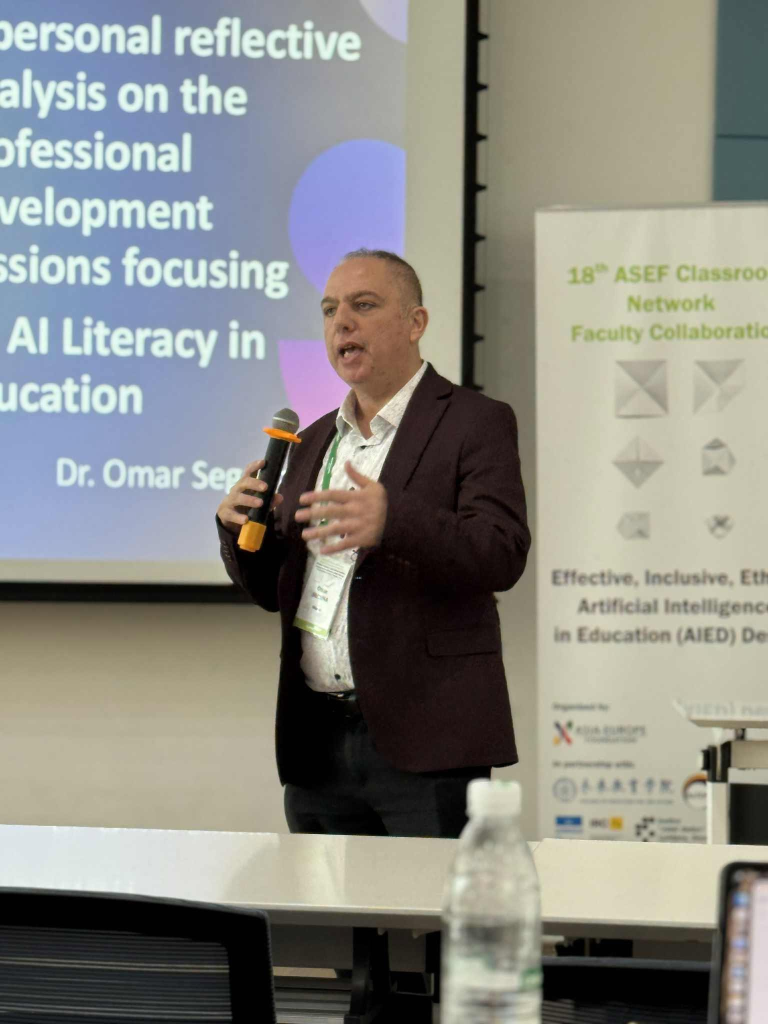
International AIED Symposium 2025, 14th of November 2025 | Beijing Normal University | Zhuhai, China. I presented my study:   Bridging the Gap in Professional Development for AI Literacy in Education through Innovative Tools:   A Personal Reflective Practice
Belgium, Brussels

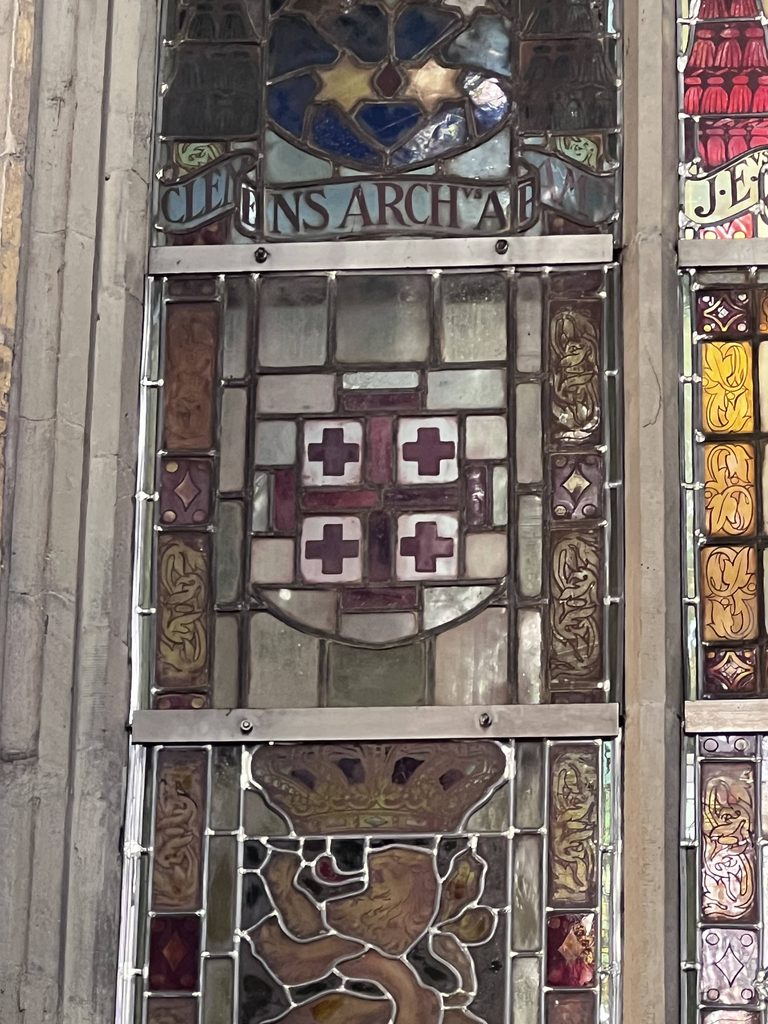
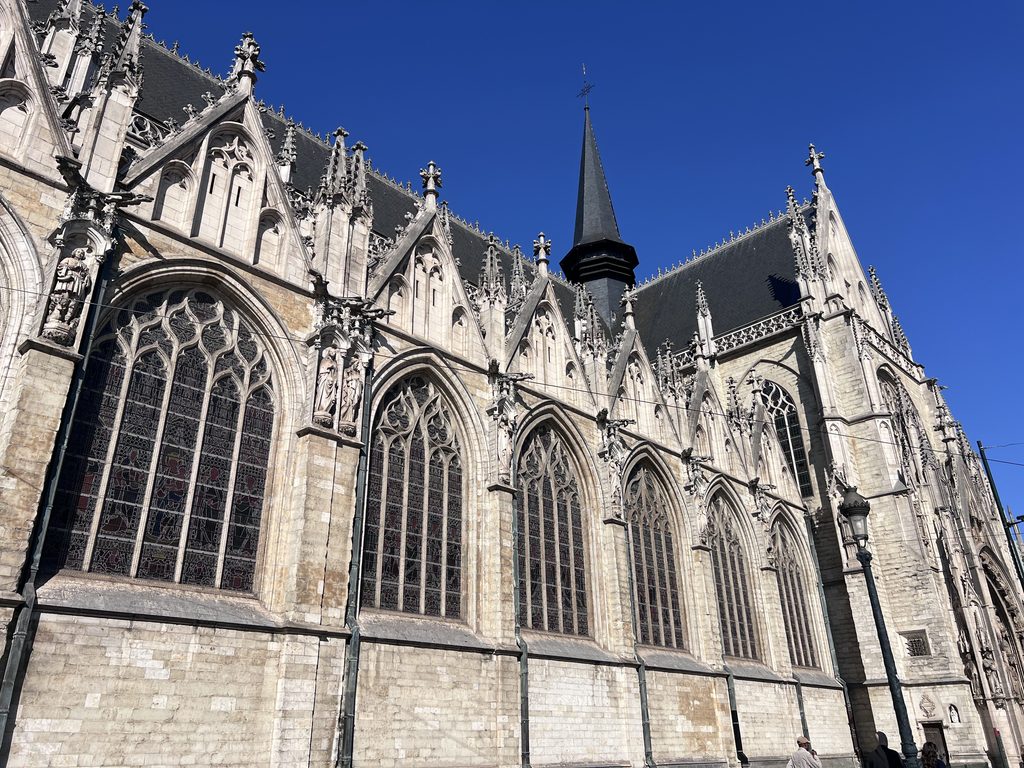
Notre-Dame des Victoires au Sablon, in the heart of Brussels, the capital of Belgium, is one of the most remarkable Gothic churches in the country. Its history reflects the city’s religious, artistic and political life. Its origins lie in the 14th century, but its importance grew enormously during the 15th and 16th centuries, when pilgrimage and devotion to the miraculous Virgin made it a major spiritual centre. The church was further enriched by powerful families, including the Habsburgs, Thurn und Taxis and Arenberg. Following periods of destruction and decline, successive generations invested in its restoration and artistic renewal. The magnificent stained-glass programme was largely recreated in the 19th and 20th centuries, while two windows above the Thurn und Taxis chapels were beautifully reassembled by Samuel Coucke in 1861 from surviving 16th-century glass fragments. King Albert I and Queen Elisabeth are also commemorated in a striking window honouring the victims of the First World War. Since 1930, the church has served as the chapter church of the EOHSJ in Belgium. The Belgian Lieutenancy of the Order of the Holy Sepulchre of Jerusalem established its national chapter in this church in 1931, and two choir windows were donated by the Order in 1933.

Malta, Cospicua (Bormla)

Malta, Cospicua: A glimpse of Heaven’s beauty reflected on Earth. This sacred masterpiece reminds us of the eternal glory of the Lord above. The Collegiate Church of the Immaculate Conception in Cospicua, Malta.

Malta, Senglea (l-Isla)

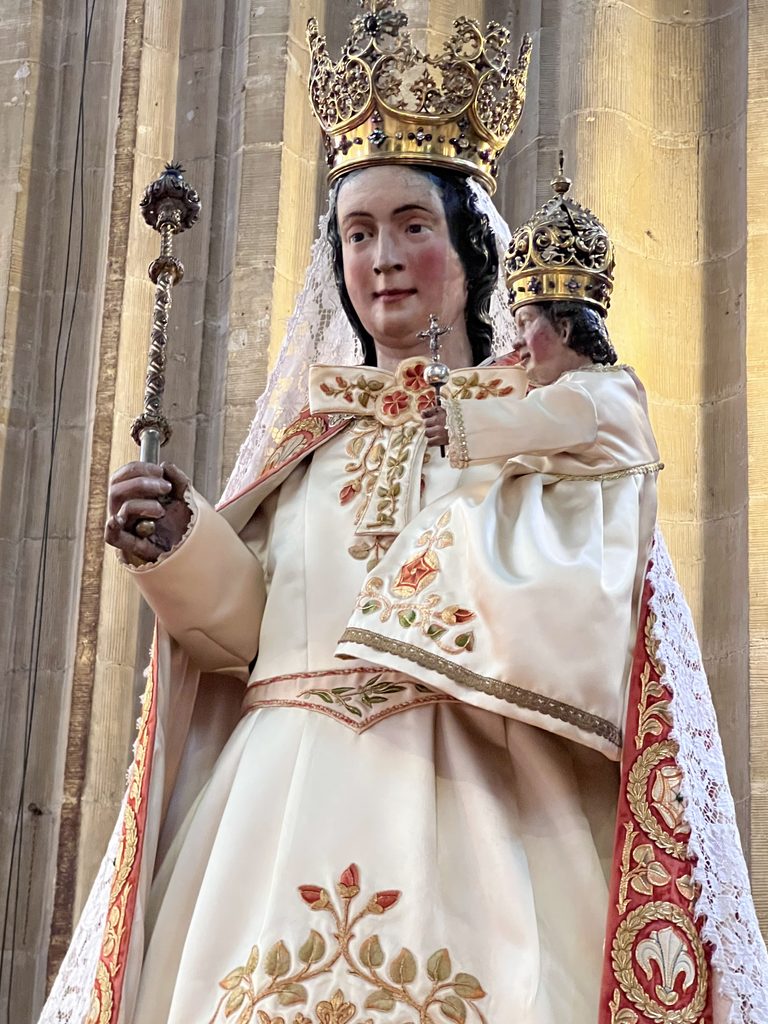
The statue of Our Lady widely known in Malta as “Il-Bambina” (which means young girl) at the basilica of the Nativity of Our Lady in Senglea (l-Isla), Malta.

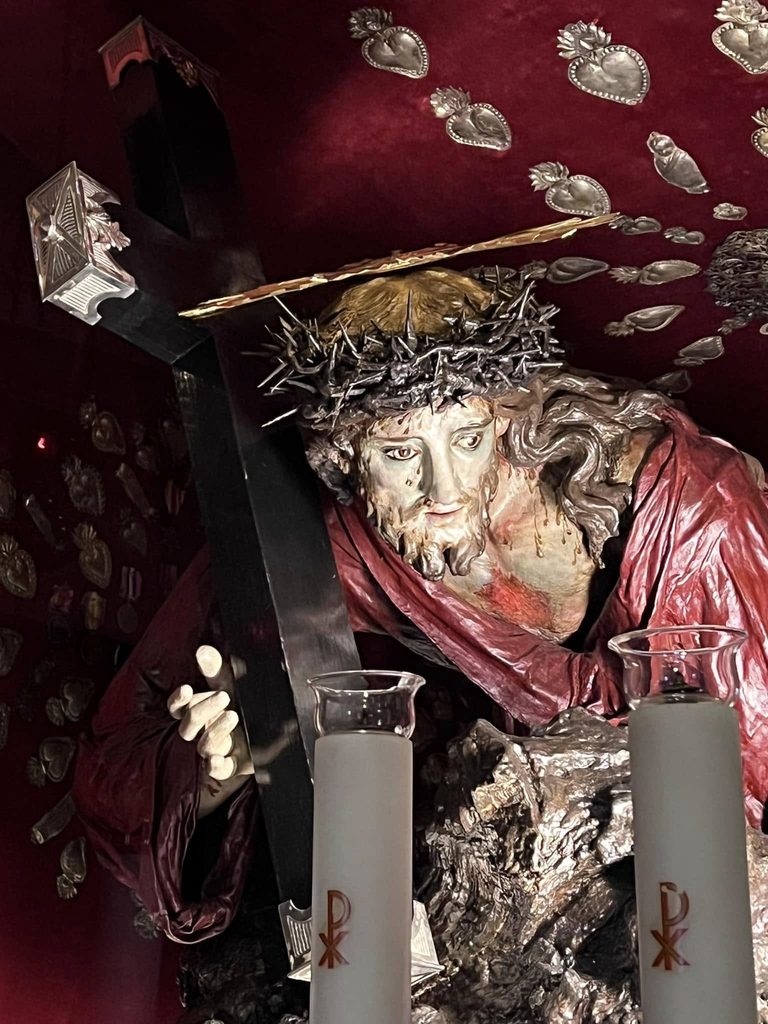
The Christ the Redeemer (Ir-Redentur) statue in Senglea, Malta, crafted from papier-mâché, presumably the work of Saverio Laferla (1742–1744). Housed in the Basilica of Our Lady of Victories, it is a powerful symbol of faith. During Lenten and June processions, devotees show solemn devotion, with acts of penance and a profound display of faith. These acts of piety are also expressed throughout the year in the church. Many attribute miracles to the statue, making it one of Malta’s most revered religious icons, central to the whole island’s spiritual life.

Malta, Rotunda of Mosta

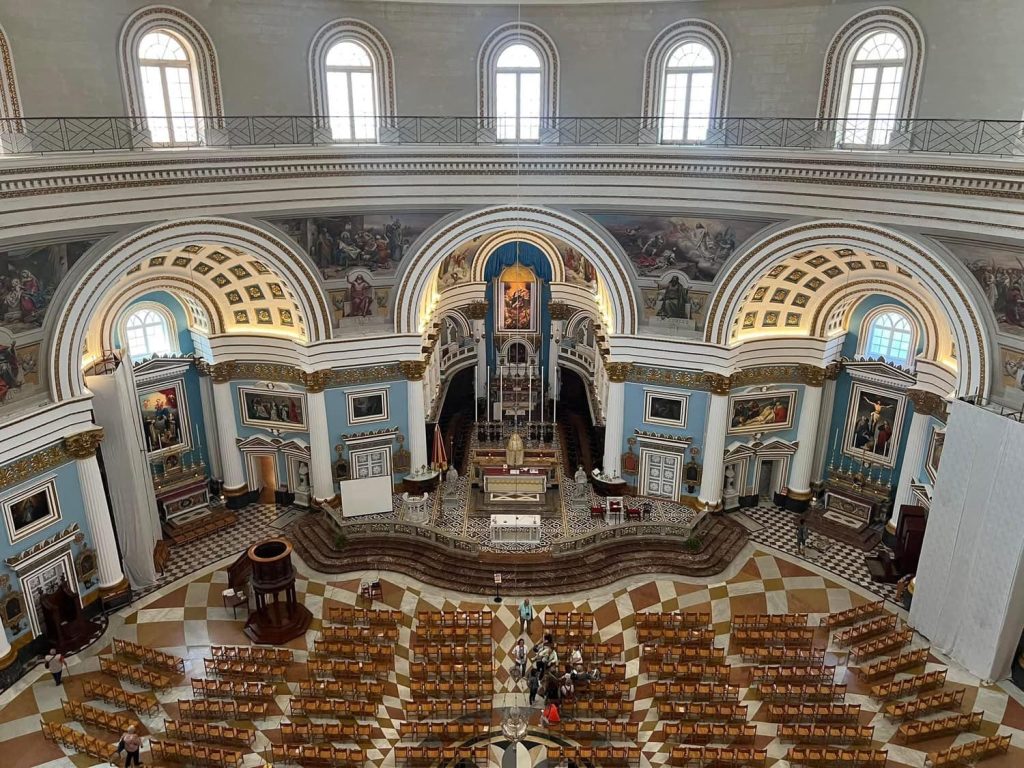
The Mosta Dome, or Rotunda of Mosta, is a remarkable church in Malta dedicated to the Assumption of St Mary. Renowned for its massive unsupported dome, one of the largest in the world, it was built between 1833 and 1860 in a neoclassical style inspired by Rome’s Pantheon. During World War II, it became famous when a bomb pierced the dome but failed to explode, sparing hundreds. This “Miracle of Mosta” adds to its iconic status.

Malta, St John’s Co-Cathedral

Malta, St John’s Co-Cathedral: The Baptism of Christ statue at St John’s Co-Cathedral, Valletta, Malta was begun by Melchiorre Gafà in 1666, but he died before finishing it. Decades later, his pupil Giuseppe Mazzuoli completed it in marble, not bronze, as a tribute to his master. The two lifelike figures are carved from a single marble block. It is one of many astonishing works of art at the cathedral.

Purposeful use of technologies instead of screen time

This presentation was aimed to provide guidelines to state schools in Malta (and therefore I used my organisation name and branding). . Here are the key takeaways from one of the presentations :

(a) Purposeful Use Over Passive Viewing: Passive screen time, especially during breaks, is discouraged. The goal is to build meaningful digital literacy and connect learning between home and school.

(b). Protecting Children’s Digital Identity: Prioritising child safety, privacy, and long-term wellbeing is paramount. Adults should avoid creating lasting online records, limit public data, and normalise privacy-first practices.

(c). Three Core Actions: Protect (safeguarding privacy), Educate (modelling responsible digital citizenship), and Inspire (encouraging child-centered digital strategies across schools and families).

(d). Utilising Official Tools: Students in Years 4–9 are equipped with 2-in-1 Windows devices with endpoint filtering. Safe single sign-on (iLearn) tools include Microsoft 365, Adobe Express, Canva for Education, Genially, Padlet, Kahoot!, and Book Creator.

(e). Strict AI & Data Privacy Rules: Generative AI tools (e.g., ChatGPT, Suno.ai, Gamma.app) may only be used by educators to create resources. No student data or identifying details may ever be entered into these tools.

(f). Unplugged Computational Thinking: Offline activities, such as following recipes, movement games, and paper-based exercises, teach algorithms, decomposition, and AI prompt logic without any screen time.

(g). Safer Digital Spaces: Some games like Roblox are blocked on 2-in-1 devices. Students cannot independently create Teams chat groups.

(h). GDPR & Student Data Protection: Microsoft 365 for education usage is fully GDPR-compliant. Data is strictly processed for education with minimal identifiers retained.

Let’s prepare children for the digital future within a safe and supportive environment! 📱💡

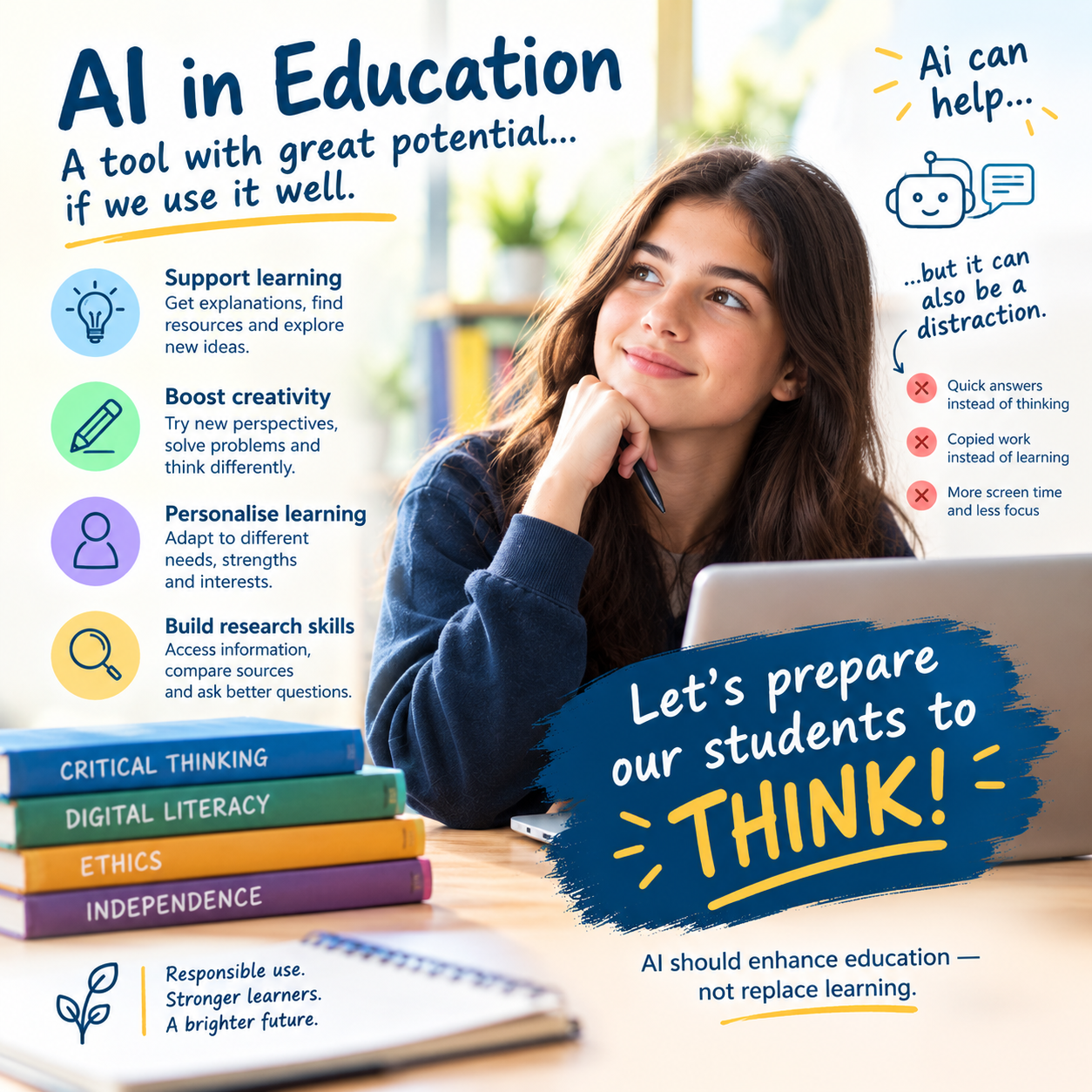
AI is already becoming part of how our students learn.

As Artificial Intelligence becomes increasingly present in education, our responsibility goes beyond simply teaching students how to use it. We need to equip them with the skills to use AI intelligently, responsibly and ethically.

💡 AI can support creativity, research, personalised learning and problem-solving — but it should enhance learning, not replace thinking.

Our focus must be on AI literacy: encouraging students to question, verify information, recognise limitations and, most importantly, continue developing their own critical-thinking skills.

The latest OECD PISA results show that Maltese students are among the frequent users of AI chatbots for schoolwork. This presents both an opportunity and a responsibility for education.”

The future is not just about using AI. It’s about preparing our students to think, create and make informed decisions in an AI-powered world. 🌍💻

24th Sunday in Ordinary Time – Year A.

We are not perfect, and that is something we should accept with humility. The Lord knows our weaknesses, our struggles and the moments when we fail. Yet our imperfections should never become an excuse to remain distant from Him.

Our sins, whether small or great, are serious offences against God because they turn us away from His plan for us and for the world. Yet, through Christ, God offers us forgiveness for a debt we could never repay. His mercy has no limits. The enormous debt in today’s Gospel symbolises the greatness of God’s forgiveness.

However, Jesus also reminds us that we can reject this mercy when we refuse to forgive others. Having experienced God’s compassion ourselves, we are called to extend that same mercy to those who hurt us.

The message is not that it is acceptable to sin simply because the Lord is always ready to forgive. Rather, God’s forgiveness is an invitation to return to Him through love. Above all, we encounter this mercy in the Sacrament of Reconciliation, and then through prayer, other acts of devotion, and every sincere effort to draw closer to Christ. Having received His mercy, we are called to live it and share it with others