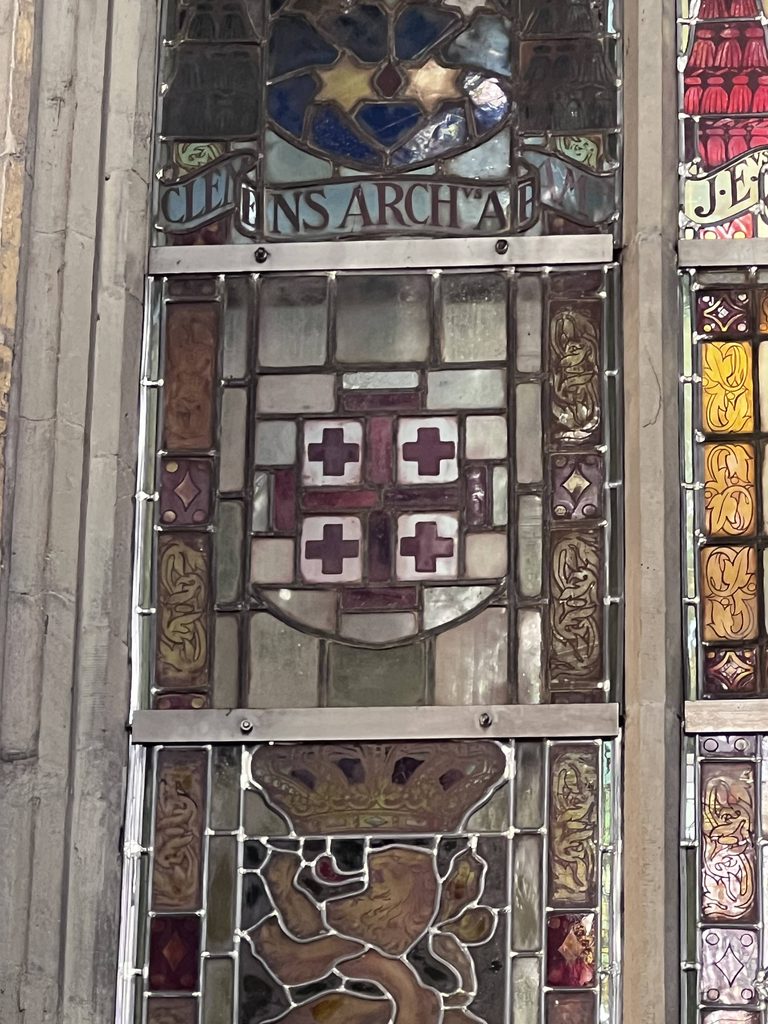
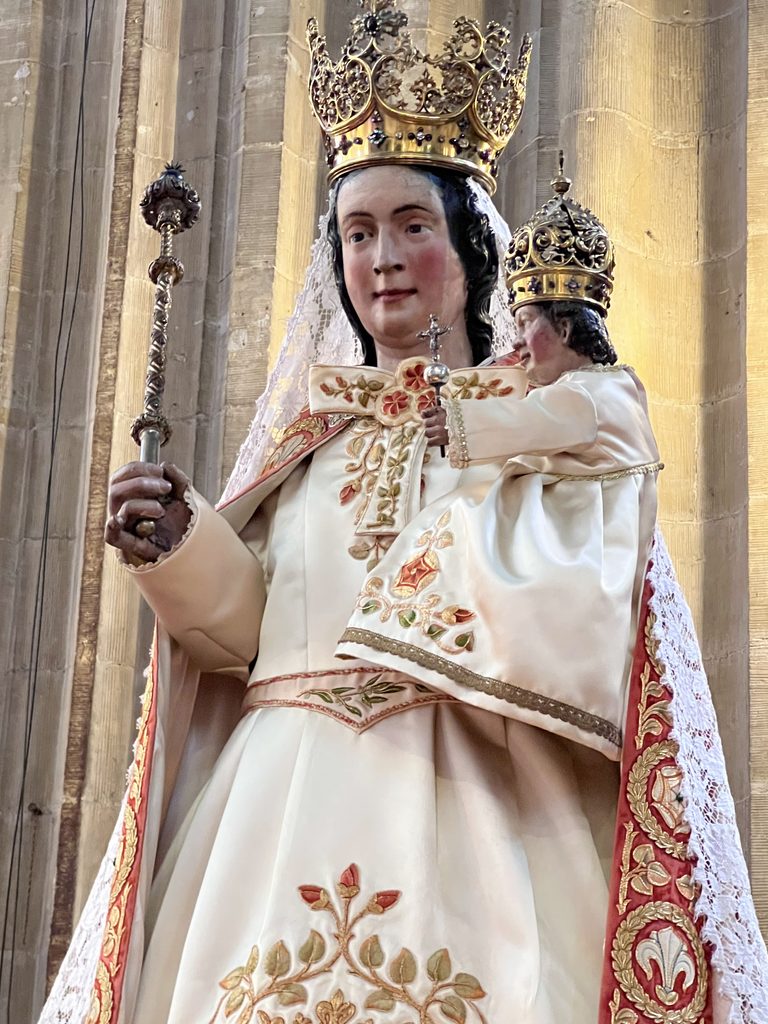
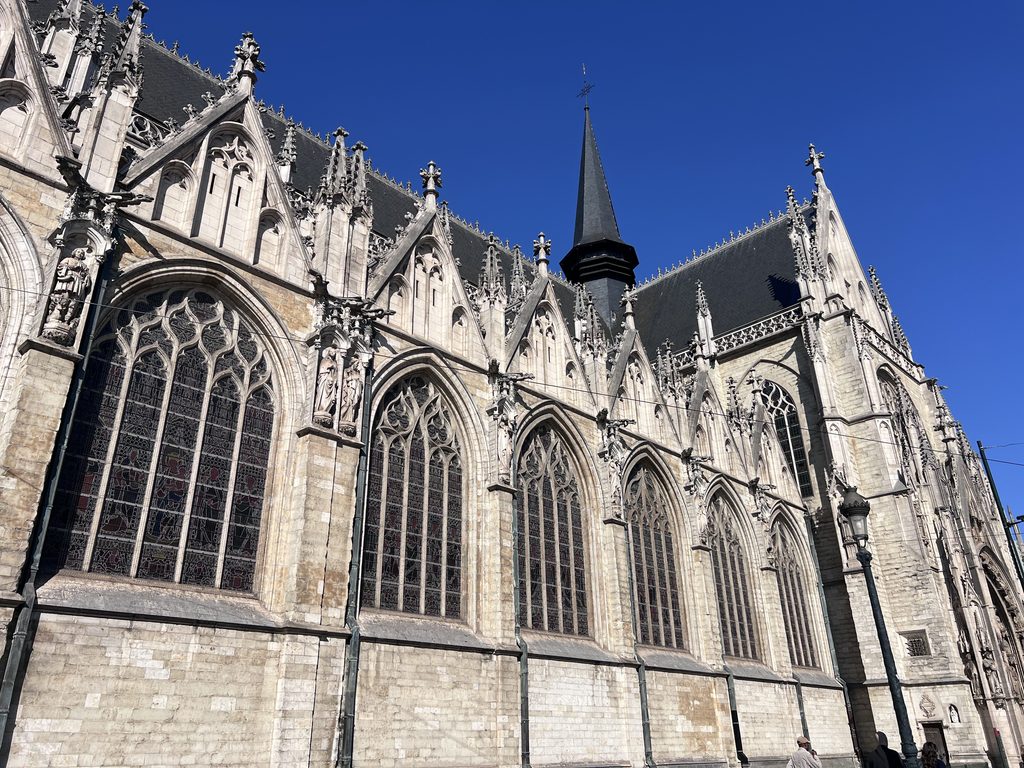
Notre-Dame des Victoires au Sablon, in the heart of Brussels, the capital of Belgium, is one of the most remarkable Gothic churches in the country. Its history reflects the city’s religious, artistic and political life. Its origins lie in the 14th century, but its importance grew enormously during the 15th and 16th centuries, when pilgrimage and devotion to the miraculous Virgin made it a major spiritual centre. The church was further enriched by powerful families, including the Habsburgs, Thurn und Taxis and Arenberg. Following periods of destruction and decline, successive generations invested in its restoration and artistic renewal. The magnificent stained-glass programme was largely recreated in the 19th and 20th centuries, while two windows above the Thurn und Taxis chapels were beautifully reassembled by Samuel Coucke in 1861 from surviving 16th-century glass fragments. King Albert I and Queen Elisabeth are also commemorated in a striking window honouring the victims of the First World War. Since 1930, the church has served as the chapter church of the EOHSJ in Belgium. The Belgian Lieutenancy of the Order of the Holy Sepulchre of Jerusalem established its national chapter in this church in 1931, and two choir windows were donated by the Order in 1933.